
DIY vs. Professional: The Ultimate Guide to Printing Your Own Labels or Ordering from a Manufacturer
Choosing between DIY label printing and ordering from a professional manufacturer is a common challenge for many businesses. Small startups, eCommerce sellers, warehouses, and growing brands often begin by printing labels themselves, only to later question whether it’s still the most efficient option.
This article is written from the perspective of a custom thermal label manufacturer. We do not sell desktop printers or DIY printing equipment. Instead, we help businesses produce custom-printed thermal labels at scale, including shipping labels, barcode labels, and logistics labels.
In this guide, we objectively compare DIY label printing and professional manufacturing, focusing on cost, quality, scalability, and real-world use cases. By the end, you’ll have a clear understanding of which option best fits your current needs—and when it makes sense to work with a professional label manufacturer.
The Benefits of DIY Label Printing
DIY label printing has become popular among startups and small businesses that require flexibility and low upfront investment. One of the main advantages is full control over the design process. With a DIY setup, labels can be created, edited, and printed immediately, making it suitable for testing products or handling very small volumes.
Another benefit is short-term cost control. When label usage is low, printing labels in-house may seem more economical, especially if a printer and basic materials are already available. DIY printing can also be convenient for businesses that need labels on demand or frequently change designs.
However, these benefits tend to diminish as order volumes increase or quality requirements become stricter.
The Advantages of Professional Label Printing

Professional label printing offers clear advantages in consistency, durability, and scalability. Manufacturers use industrial-grade printing equipment that produces sharp barcodes, stable colors, and reliable adhesion—factors that are difficult to achieve consistently with home or office printers.
From a manufacturer’s perspective, many businesses turn to professional printing when brand presentation, shipping reliability, or operational efficiency becomes a priority. Factory-produced labels are designed to perform under real-world conditions such as cold storage, friction during shipping, and long-term handling.
Professional manufacturers also provide access to a wide range of materials, including direct thermal paper, thermal transfer labels, synthetic films, and specialty adhesives. This ensures labels remain legible and intact throughout their entire lifecycle.
Cost Comparison: DIY vs. Professional
Cost is often the deciding factor when choosing between DIY and professional label printing. DIY printing may appear cost-effective at first, especially for small quantities. However, many hidden costs are frequently overlooked, including ink or toner consumption, printer maintenance, material waste, and time spent troubleshooting print issues.
From our experience as a label manufacturer, businesses typically find professional printing more economical once monthly usage reaches approximately 5,000 to 10,000 labels. At this scale, factory production benefits from economies of scale, resulting in a lower cost per label and more predictable expenses.
Additionally, professional printing eliminates setup errors, reduces waste, and ensures consistent output—factors that significantly impact long-term operational costs.
Quality Considerations in Label Printing
Label quality directly affects brand perception, scanning accuracy, and logistics efficiency. One of the most significant differences between DIY and professional printing lies in quality consistency.
Professional manufacturers use calibrated printing systems and quality-controlled materials to ensure barcodes scan reliably and labels maintain clarity over time. This is particularly important for shipping labels, warehouse labels, and barcode labels used in automated systems.
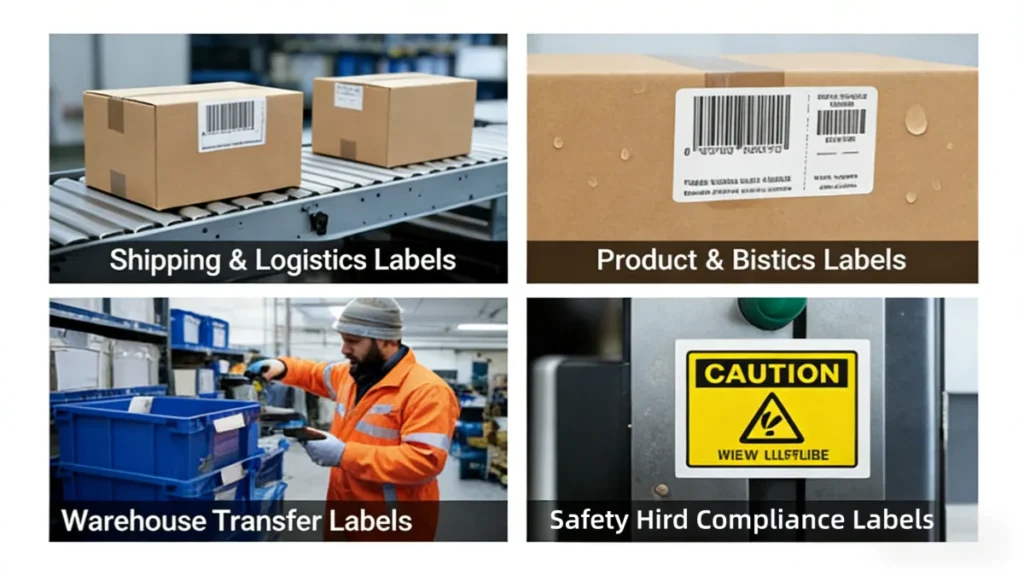
Material selection also plays a critical role. DIY printing is often limited to standard office label materials, while professional manufacturers can recommend appropriate materials based on application—such as moisture resistance, temperature exposure, or surface type. These factors are essential for labels used in logistics, cold storage, or high-friction environments.
Types of Labels: What You Need to Know
Different applications require different types of labels. Product labels, shipping labels, barcode labels, and warehouse labels all serve unique purposes and performance requirements.
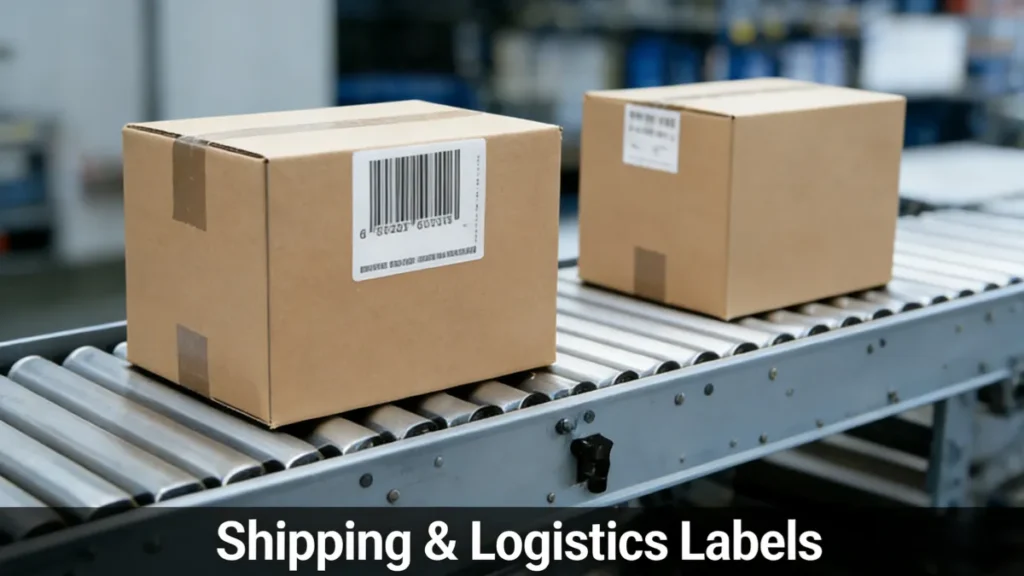
For example, shipping and logistics labels must maintain barcode readability throughout transportation and handling. Direct thermal labels are commonly used for this purpose due to their efficiency and compatibility with logistics systems.
Promotional or branding labels may require higher visual quality, specific finishes, or custom shapes. Safety and compliance labels must meet industry regulations and remain legible over long periods. Choosing the correct label type is often easier when working with a professional manufacturer who understands these requirements.
Tools and Materials for DIY Label Printing
DIY label printing typically requires a desktop printer, design software, and compatible label materials. While this setup may be sufficient for basic needs, it often limits material choices and print durability.
Inkjet and laser printers may struggle with moisture resistance, adhesive strength, and barcode precision. As labeling requirements grow more complex, these limitations can lead to inconsistent results and operational inefficiencies.
For businesses with increasing label demand or strict quality requirements, relying solely on DIY tools may no longer be practical.
How to Choose the Right Manufacturer for Professional Printing
Selecting the right label manufacturer is a critical step for businesses transitioning to professional printing. Key factors to consider include material options, minimum order quantities (MOQ), sample availability, production lead times, and experience with international shipping.
A reliable manufacturer should be able to recommend suitable materials, provide samples, and maintain consistent quality across repeat orders. Clear communication and technical support are also essential, especially for businesses new to custom label production.
Working with an experienced manufacturer helps reduce errors, control costs, and ensure labels perform as expected in real-world applications.
Common Mistakes in Label Printing and How to Avoid Them
One common mistake in label printing is choosing materials based solely on price rather than application. Labels exposed to moisture, heat, or friction require specific materials and adhesives.
Another frequent issue is poor barcode quality caused by low-resolution printing or incompatible materials. This can lead to scanning failures and operational delays.
Professional manufacturers help businesses avoid these mistakes by recommending tested solutions and providing consistent quality control throughout production.
Conclusion: So, Should You Print Labels Yourself or Order from a Manufacturer?
Whether you should print labels yourself or work with a professional manufacturer ultimately depends on scale, consistency, and how much operational effort you’re willing to manage.
DIY label printing can be a practical solution for small batches, short-term projects, or early-stage testing. It offers flexibility, immediate control, and low initial commitment. For businesses just getting started, this approach can be sufficient.
However, once volumes increase—or when labels must withstand shipping, handling, moisture, cold storage, or long-term use—the limitations of in-house printing become more apparent. Inconsistent print quality, limited material options, wasted supplies, and time spent troubleshooting equipment often outweigh the perceived cost savings.
This is where professional label manufacturing becomes the more efficient and reliable option. A manufacturer manages material selection, print consistency, adhesive performance, and production efficiency at scale. For shipping labels, barcode labels, and thermal labels used in logistics and fulfillment, reliability and consistency are critical to daily operations.
In most real-world scenarios, the question isn’t whether you can print labels yourself—it’s whether doing so is the best use of your time and resources. As businesses grow, outsourcing label production often allows teams to focus on operations, fulfillment, and customer service rather than managing printing issues.
If you are evaluating whether it’s time to move from DIY printing to professional label manufacturing, understanding your volume, application requirements, and long-term goals is the first step toward making the right decision.
FAQ
1: Is it cheaper to print labels yourself or order from a manufacturer?
Printing labels yourself may seem cheaper for very small quantities, but hidden costs such as ink, printer maintenance, material waste, and time spent managing printing issues often increase overall expenses. For growing businesses with higher volumes, ordering from a professional manufacturer is often more cost-effective due to economies of scale and consistent output.
2: When should a business switch from DIY label printing to a professional manufacturer?
Many businesses consider switching to professional label manufacturing when label volumes increase, quality consistency becomes critical, or labels must perform reliably during shipping, storage, or handling. At this stage, outsourcing label production helps reduce operational burden and ensures predictable quality.
3: Are professional labels better for shipping and barcode scanning?
Yes. Professional label manufacturers use industrial printing equipment and tested materials to ensure barcode readability, adhesive performance, and durability. This is especially important for shipping labels and barcode labels used in logistics and automated systems.