Introduction: Why Moisture Is a Real Risk in Shipping
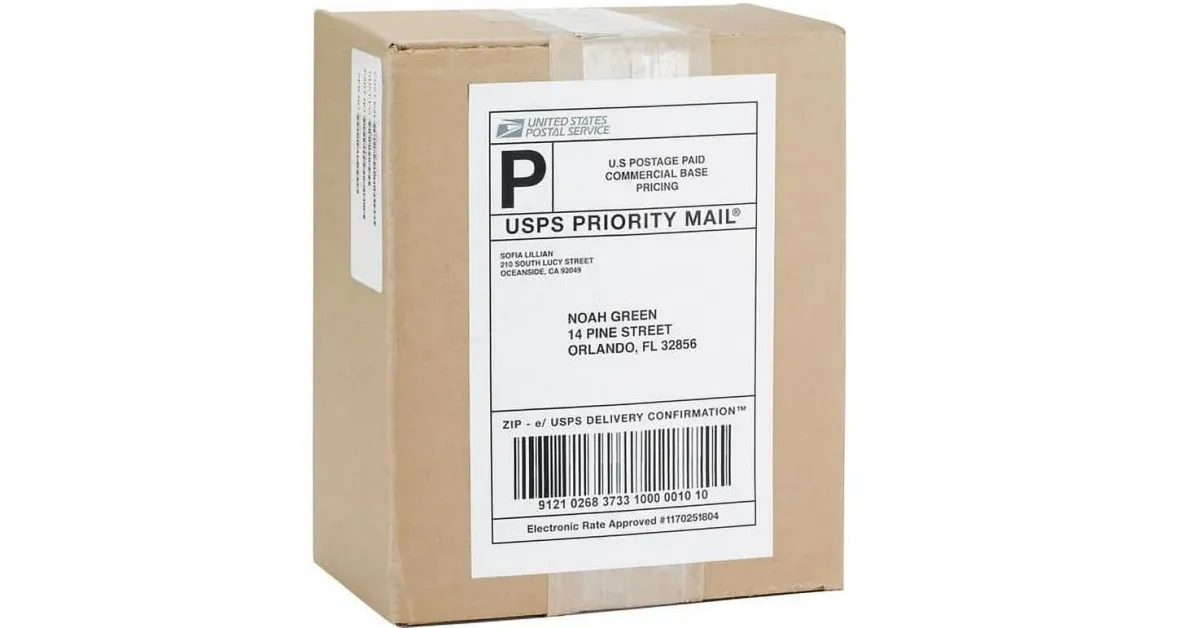
Thermal labels are widely used for shipping, warehousing, and logistics—but one common question keeps coming up: can thermal labels get wet during shipping, and what actually happens if they do?
In real-world logistics, moisture exposure is more common than many people expect. Packages may travel through rainy loading docks, humid warehouses, or long-distance sea freight, where temperature changes inside containers can cause condensation. Cold-chain transportation adds another layer of risk, as moisture can form quickly when packages move between cold and warm environments.
While thermal labels are designed for speed and convenience, water and high humidity can affect their performance if the label material is not matched correctly to the shipping conditions. Faded text, darkened barcodes, or poor adhesion can all lead to scanning issues—creating delays, relabeling costs, or even rejected shipments.
Understanding how thermal labels react to moisture and which options perform better in wet or humid environments helps businesses choose the right labeling solution before problems occur, not after.
What Are Thermal Labels Made Of?
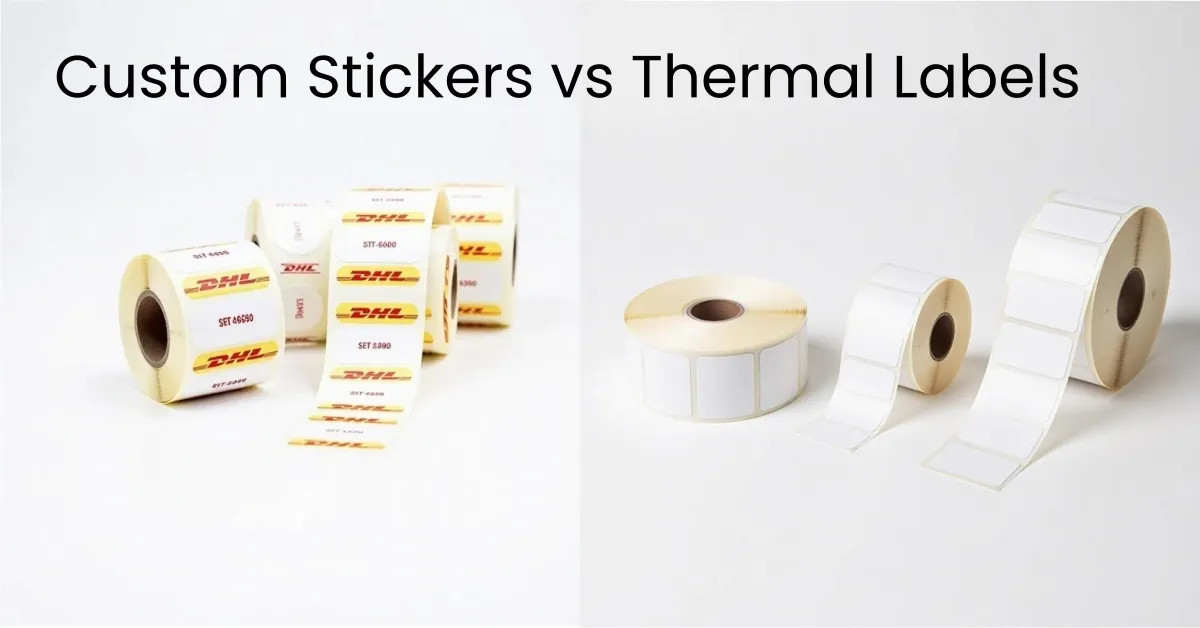
Most shipping thermal labels used today are direct thermal labels, which are printed without ink or ribbon. Instead, the printer applies heat directly to the label surface to create text and barcodes.
A standard direct thermal label typically consists of:
- Thermal paper facestock
- Heat-sensitive coating
- Adhesive layer
The thermal coating is the most critical component. While it enables fast and cost-effective printing, it is also sensitive to environmental factors, including moisture, friction, heat, and chemicals. This sensitivity explains why thermal labels may degrade when exposed to wet or humid shipping conditions.
What Happens When Thermal Labels Get Wet?
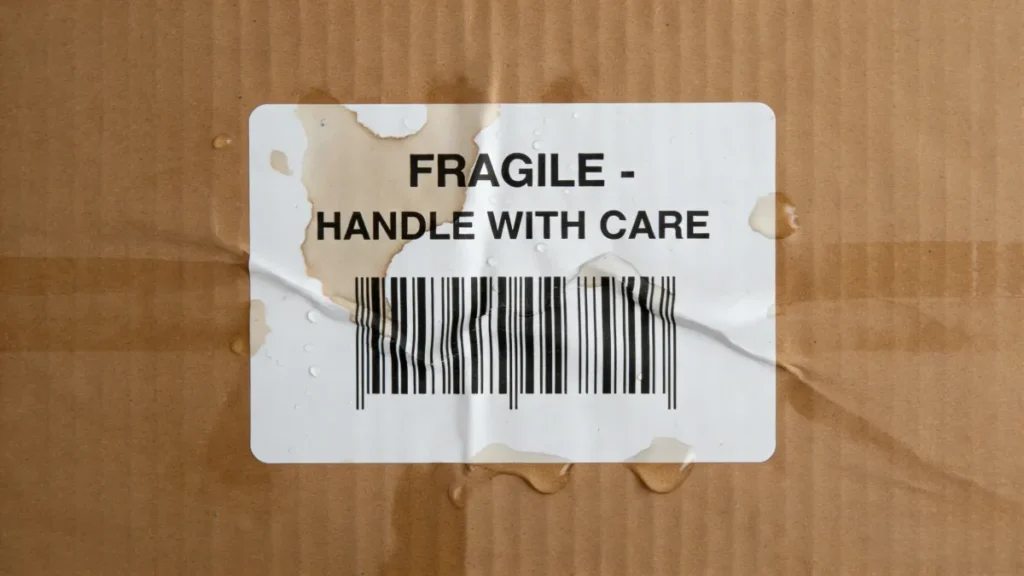
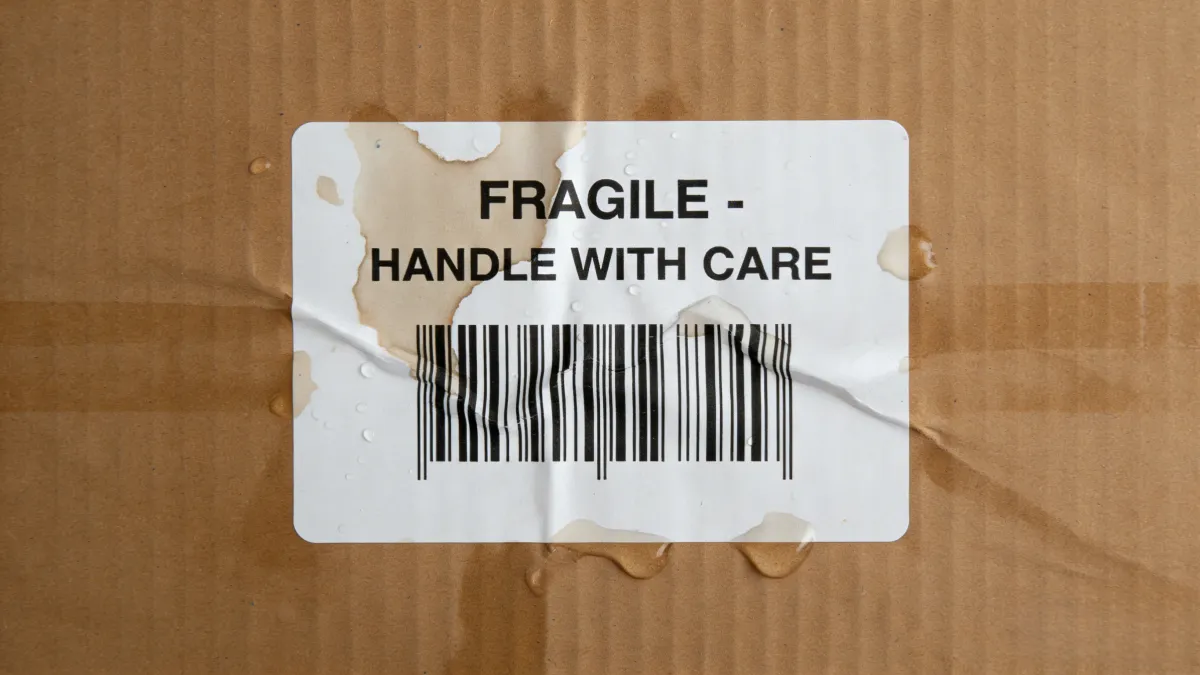
Thermal labels exposed to moisture may fade, wrinkle, or become unreadable.
Short-Term Moisture or High Humidity
With brief exposure—such as humid storage or light condensation—thermal labels may show:
- Slight surface fogging
- Minor fading
- No immediate barcode failure
In many cases, labels remain scannable. However, these are early warning signs that the thermal coating has begun reacting to moisture.
Prolonged Exposure to Water or Condensation
Extended exposure to rain, container condensation, or damp environments often leads to:
- Uneven fading or darkening
- Blurry or unreadable barcodes
- Adhesive weakening or edge lifting
- Permanent staining or discoloration
Even small scanning failures can result in manual relabeling, shipment delays, or rejected cartons, especially in automated logistics systems.
Are Thermal Labels Waterproof?
Standard direct thermal labels are not waterproof.
They may tolerate light moisture for short periods, but they are not suitable for:
- Heavy rain
- High humidity
- Cold-chain condensation
- Long sea freight transit
Some products are described as water-resistant, but water-resistant does not mean waterproof. Without the right coating or material, moisture will eventually affect readability and adhesion.
How Shipping Conditions Affect Thermal Labels
Sea Freight
Sea freight is one of the harshest environments. Container humidity can exceed 80%, and temperature changes cause frequent condensation. Without proper label materials, fading and barcode failure are common.
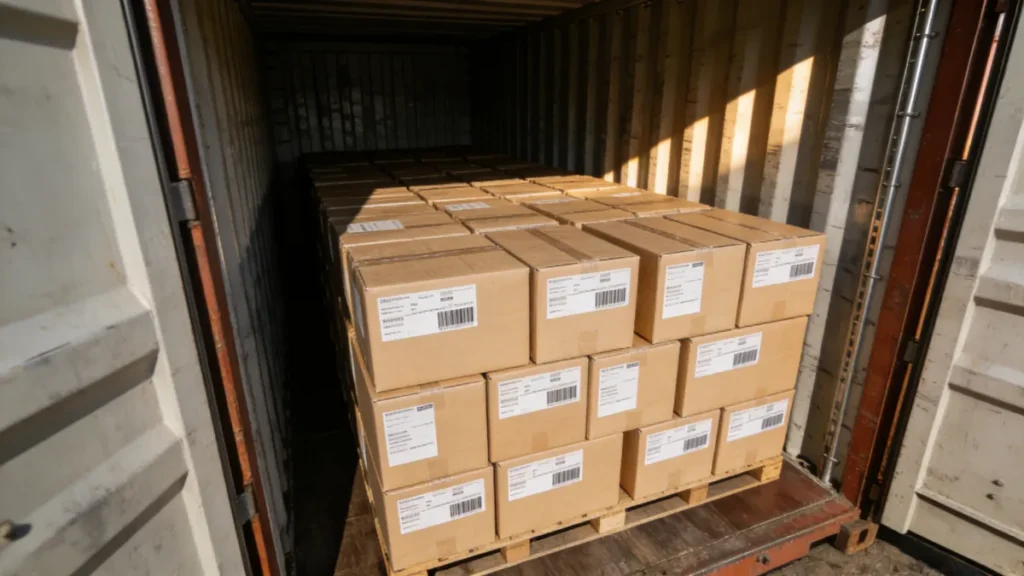
Shipping conditions such as sea freight can impact thermal label performance over time.
Air Freight
Air freight usually involves shorter transit times, but rapid temperature changes can still cause condensation. Performance is better than sea freight, but moisture risk remains.
Cold Chain & Refrigerated Transport
Cold-chain logistics are particularly challenging. When cold packages move into warmer environments, condensation forms immediately. Standard thermal labels often fail unless upgraded materials are used.
How to Prevent Thermal Labels from Damage During Shipping
Using suitable label materials reduces the risk of damage in challenging shipping conditions.
Choose the Right Label Material
- Top-coated thermal labels
Extra protective layer for improved moisture and abrasion resistance. - Synthetic labels (PP / PET)
Highly resistant to water, tearing, and chemicals.
Consider Thermal Transfer Labels
Thermal transfer labels use a ribbon instead of heat-sensitive coating.
Benefits include:
- Better water resistance
- Long-term barcode readability
- Greater durability for international shipping
Application & Packaging Tips
- Apply labels to clean, dry surfaces
- Avoid condensation-prone areas
- Use moisture barriers or outer packaging when needed
Quick Buyer Decision Guide: Which Label Should You Use?
Choose Your Label Based on Shipping Conditions
Use standard direct thermal labels if:
- Shipments are short-distance
- Environment is dry and stable
- Labels are temporary
Upgrade to top-coated thermal labels if:
- Occasional humidity is expected
- Warehouses are not fully climate-controlled
Switch to thermal transfer labels if:
- Shipping internationally or by sea
- Long-term barcode readability is required
Choose synthetic labels (PP / PET) if:
- Shipping involves cold chain
- High humidity or condensation is unavoidable
Quick Summary Table
| Shipping Condition | Recommended Label |
|---|---|
| Dry, short transit | Direct thermal |
| Humid warehouse | Top-coated thermal |
| Sea freight | Thermal transfer |
| Cold chain | Synthetic labels (PP / PET) |
Conclusion: Choosing the Right Label for Your Shipping Conditions
So, can thermal labels get wet during shipping? Yes—but performance depends entirely on the label material and environment.
Standard direct thermal labels work well for short, dry shipments but are not designed for prolonged moisture exposure. In demanding conditions such as sea freight, cold storage, or international logistics, selecting the correct material is critical.
By choosing top-coated thermal labels, synthetic materials, or thermal transfer labels when necessary, businesses can reduce scanning failures, relabeling costs, and shipment delays.
Reliable shipping is not just about speed—it’s about readability, durability, and consistency from origin to destination.
FAQ: Thermal Labels and Moisture Exposure
Can thermal labels get wet and still scan correctly?
Yes, light moisture may not immediately affect scanning, but prolonged exposure often leads to barcode failure.
Are thermal shipping labels waterproof?
No. Standard direct thermal labels are not waterproof.
What happens to thermal labels during sea freight?
Condensation inside containers can fade text, blur barcodes, and weaken adhesive.
Can I laminate thermal labels?
Lamination can help but adds cost. Upgrading label materials is usually more practical.
Are thermal transfer labels better for wet environments?
Yes. They offer superior durability and water resistance.
Which labels are best for cold-chain shipping?
Synthetic labels or thermal transfer labels perform best.
CTA
We are a custom thermal label manufacturer, helping businesses choose and produce labels that perform reliably under real shipping conditions.
If you are unsure which label material fits your shipping environment, we can recommend suitable options or provide samples for testing.