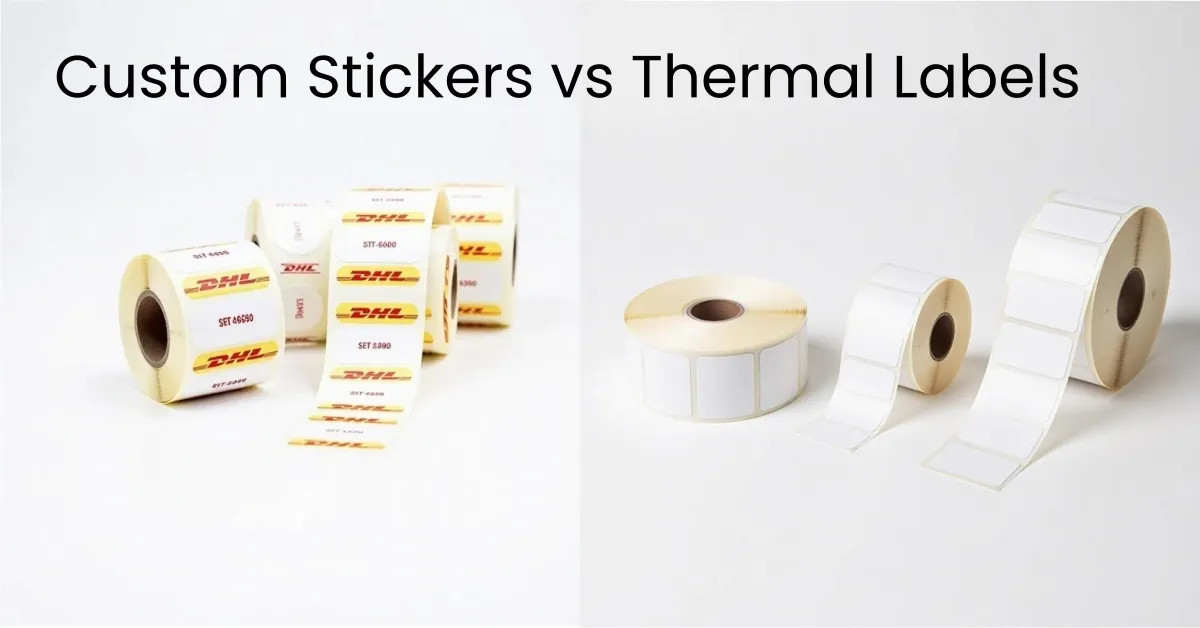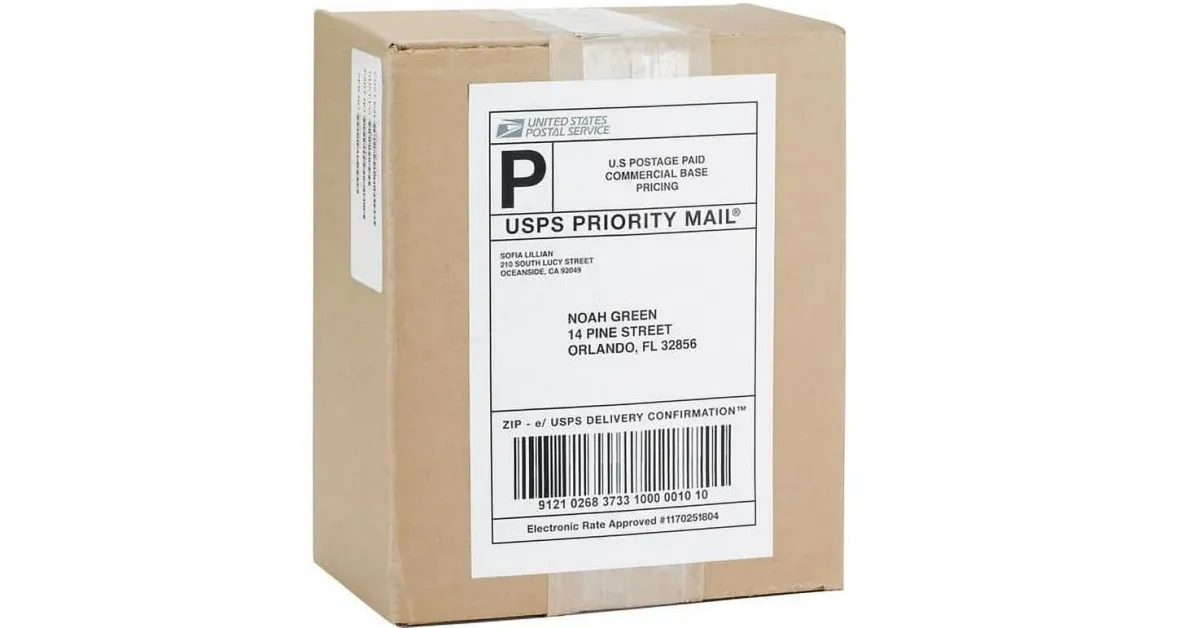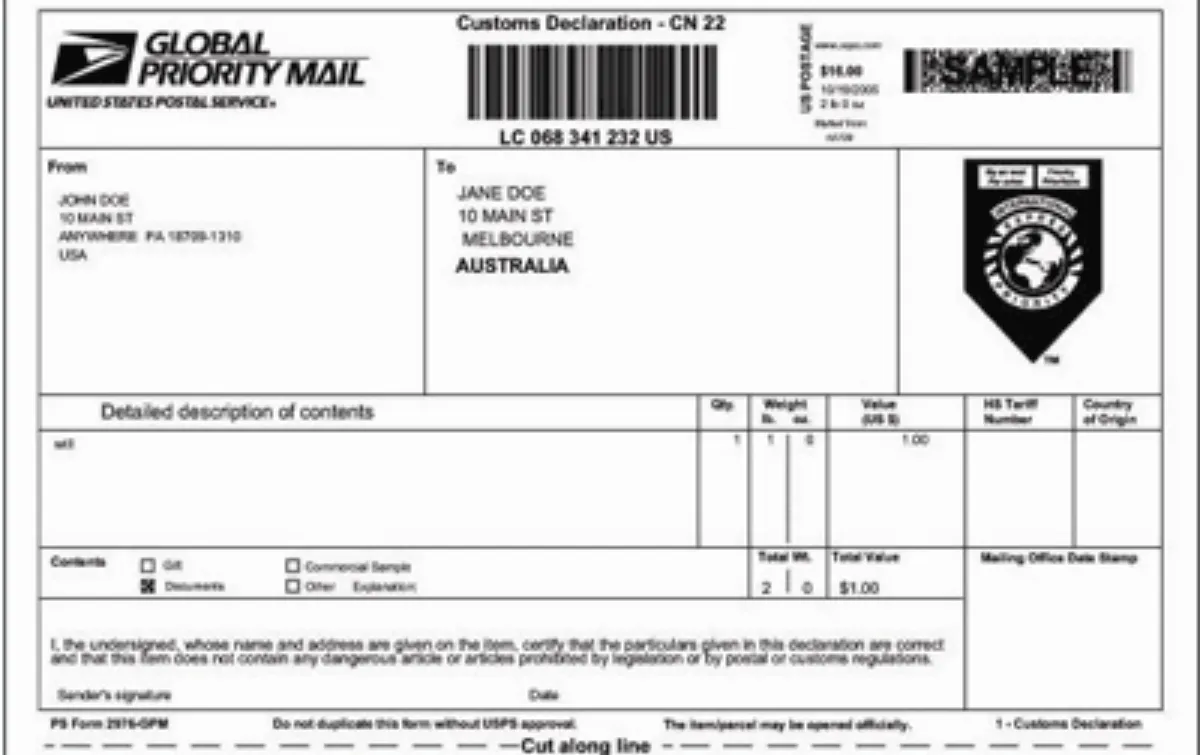

The custom labels cost can vary widely. Large orders might cost as little as $0.01 per label, while small, fancy batches can exceed $1.00 per label. Several factors influence the custom labels cost. The quantity you order plays a big role—buying more labels usually lowers the cost per label. The material you choose also impacts the custom labels cost; polyester or woven fabric tends to be more expensive than paper. The size of the label affects how much material is needed, which in turn changes the cost. Additionally, the printing method, whether digital or flexographic, can alter the custom labels cost. Labels with intricate designs or special finishes often come with a higher price. Businesses should consider all these factors to manage their custom labels cost effectively and get the best value.
Key Takeaways
If you order more labels, each label costs less. This is because setup costs are shared over many labels. Picking simple shapes and regular materials makes labels cheaper. Using fewer colors also helps lower the price. Vinyl and polyester labels cost more money. But they last longer and are good for outside or wet places. Professional printing is best for big orders. It gives better quality and nice finishes. DIY printing works for small and fast projects. If you plan early and talk to your label supplier, you can choose the best options. This can help you save money.
Custom Labels Cost Overview
Pricing
Custom labels cost changes based on a few things. The number of labels you order matters a lot. If you buy just a few, each label can cost about $0.95. If you buy a lot, the price drops to about $0.03 per label. SheetLabels.com lets you order from 10 to over 100,000 labels. They give free art checks and proofs. Shipping takes 1 to 6 business days after you approve the proof.
Note: Prices for labels can go up or down during the year. Holidays and back-to-school times can make prices change. Stores use special tools to change prices when lots of people want labels. This helps them earn more money and keep sales steady.
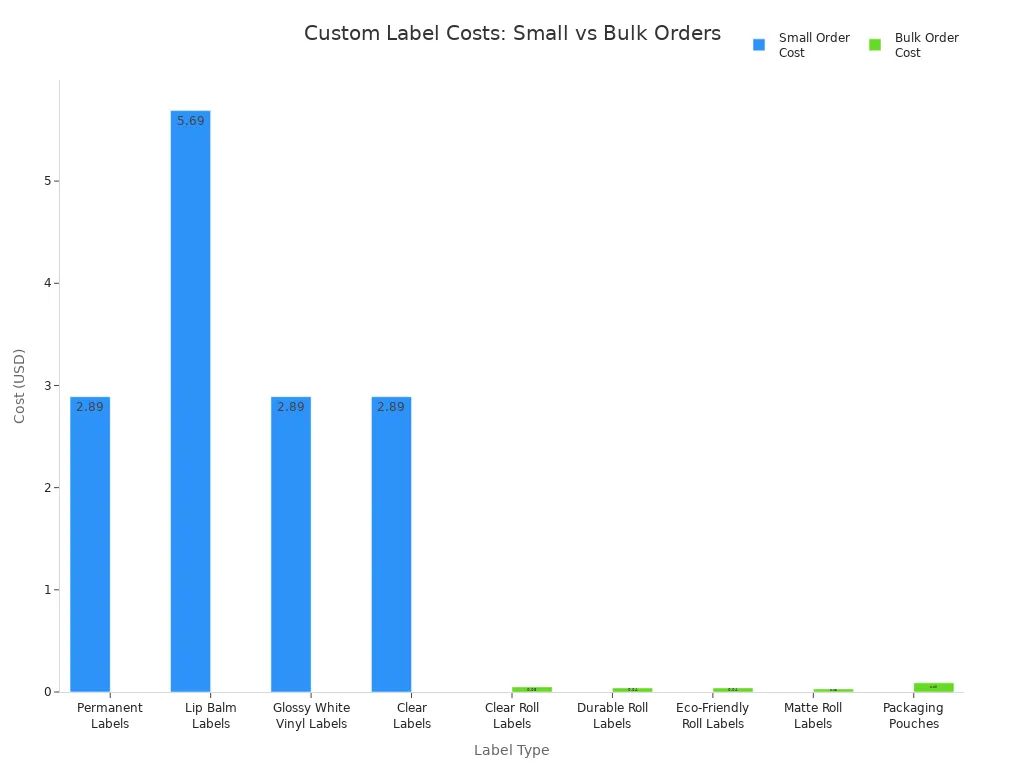
Here is a table that shows how much different labels cost in small and big orders:
Label Type | Small Order Cost (per page or label) | Bulk Order Cost (per label) | Typical Applications |
|---|---|---|---|
Permanent Labels | $2.89 per page | N/A | Durable, waterproof, indoor/outdoor use |
Lip Balm Labels | $5.69 per page | N/A | Cosmetics, small product branding |
Glossy White Vinyl Labels | $2.89 per page | N/A | Sleek packaging finish |
Clear Labels | $2.89 per page | N/A | Versatile, transparent branding |
Clear Roll Labels | N/A | $0.05 per label | Bulk packaging, durable uses |
Durable Roll Labels | N/A | $0.04 per label | Long-lasting, outdoor products |
Eco-Friendly Roll Labels | N/A | $0.04 per label | Sustainable packaging |
Matte Roll Labels | N/A | $0.03 per label | Soft finish, food packaging, cosmetics |
Packaging Pouches | N/A | $0.09 per label | Custom branded packaging |
Shipping and handling add to the total price. If you order a lot, shipping might cost less per label. But you need more space to store them. How the labels are packed, like on rolls or sheets, also changes shipping costs.
Examples
Custom labels cost different amounts based on what they are made of, their size, and how many you get. For example:
If you buy 500 waterproof, glossy labels for products, it might cost $7 per sheet or $0.10–$0.15 for each label. Waterproof and glossy labels cost more because they use special materials and printing.
If you order 10,000 simple shipping labels on matte paper, each label can cost $0.03–$0.05. Buying a lot at once makes each label cheaper for businesses.
Tip: Buying more labels at one time makes each label cost less. This is because the setup and making costs are shared. Ordering every three months instead of every month can save money.
People use custom labels for many things. Some examples are product labels, bottle labels, food packaging, and home items. Each use needs different things, which changes the price. Strong materials like clear or white film cost more but last longer. Semi-gloss paper and matte labels are cheaper.
Some people make mistakes when guessing label costs. They might forget about the size, pick the wrong material, or not think about how long it takes to make them. Talking to customer service can help you pick the best and cheapest materials.
Fast digital printing helps companies get labels quickly. This lets them keep up with sales and avoid delays.
Some companies offer warranties or satisfaction promises. These can make the price higher, especially if they protect your labels for longer. These promises help people trust the company and can make higher prices worth it.
Cost Factors
Size and Shape
The size and shape of a label matter a lot for price. Simple shapes like circles and rectangles cost less. This is because companies already have tools for these shapes. So, there are no extra fees or waiting. If you want a special shape, it costs more. New shapes need new tools, which take time and money. Ordering a lot of labels can make each one cheaper. But fancy shapes still make the total cost go up. Most regular shapes start at the same price. Special shapes always cost more.
Material
The material you pick changes how long your label lasts and how much it costs. Paper labels are the cheapest. But they do not last long or handle water well. Vinyl and polyester labels cost more but last longer. They are good for outside use. Polyester is the priciest because it fights off chemicals and sunlight. Vinyl is a good middle choice for price and strength. Many people pick vinyl for this reason. The table below shows how different materials compare:
Material | Durability | Use Case | Cost Level |
|---|---|---|---|
Paper | Low | Indoor, short-term | $ |
Vinyl | Medium | Outdoor, waterproof | $$ |
Polyester | High | Harsh environments | $$$ |
Tip: Vinyl and polyester are best for waterproof labels. But they cost more than paper.
Printing Method
How you print labels changes the price. Digital printing is good for small orders and detailed art. It does not need plates and costs less to set up. Flexographic printing is better for big orders. It costs more to start but gets cheaper per label. Offset printing is also for large batches and gives steady quality. Thermal printing is fast and good for quick jobs. Each way fits different needs. Picking the right one helps save money.
Quantity
How many labels you buy changes the price for each one. If you buy a lot, each label costs less. For example, 100 labels might be $1.50 each. But 10,000 labels can be just $0.15 each. Buying more at once helps small businesses save money.
Design Complexity
Easy designs keep prices low. Hard designs with many colors or cuts cost more. More colors, special cuts, or shiny parts add to the price. Picking a normal size and simple look keeps costs down.
Finish and Adhesive
The finish and glue on a label also change the price. Glossy finishes look fancy and cost more. Matte finishes look nice and cost a bit more. Special finishes like foil or raised designs cost even more. The glue matters too. Regular glue is cheap. Removable or special glue, like freezer glue, costs more.
Note: Only pick special finishes or glue if you really need them. This helps you save money and not waste supplies.
Save on Custom Labels
Bulk Orders
Bulk orders are the best way to lower custom labels cost. When a business buys many labels, each label costs less. This is because setup and making costs are shared. Bulk orders also help keep branding the same. They make sure you always have enough labels. Companies can plan with their label maker to save money. They can group similar labels in one order. They can use tools to track labels and pick the best size and layout. These steps help stop having too many labels and wasting them.
Benefits of bulk ordering include:
Lower price per label because of buying more at once.
Better materials and printing without paying more.
Easier planning and fewer times you need to reorder.
Nice packaging that makes people trust your brand.
Tip: Businesses should talk with their label maker about how many labels they need over time and during busy seasons. This helps plan better and keep costs down.
Simplify Design
Simple label designs can make custom labels cost less. Using fewer colors and easy shapes saves money. Digital printing is good for small orders or when you change designs often. Some companies saved 20% by using digital printing and simple designs. Online label sellers sometimes give discounts for first orders or using basic templates.
Use less colors to save on printing.
Pick digital printing for small or changing orders.
Do not make design changes that are not needed.
Standard Options
Standard label shapes like rectangles and squares cost less. These shapes use materials better and make less waste. Custom shapes need special tools and cost more. Fancy finishes like foil or raised designs also make prices go up. Picking normal materials and finishes helps lower custom labels cost but still looks good.
Option | Cost Impact | Notes |
|---|---|---|
Standard shapes | Lower | Use space well, less waste |
Custom die-cut shapes | Higher | Need special tools, cost more |
Premium finishes | Higher | More work, higher price |
Standard materials | Lower | White paper or clear polypropylene |
Note: Picking standard options helps keep costs low and stops extra spending on special choices.
Professional vs. DIY

Cost Comparison
You can pick professional printing or DIY for labels. Professional printing uses special machines and many materials. It gives steady quality and handles big orders well. DIY printing is good for small batches and quick changes. But DIY labels may not look as nice as professional ones.
Here is a table that shows the costs and features for each way:
Aspect | Professional Printing (Large Orders) | DIY Printing (Small Orders) |
|---|---|---|
Cost per label | $0.02 – $0.15 (bulk label pricing) | Higher per label as volume grows |
Setup Fees | Present, can be high for small runs | None |
Quality | Superior, more material and finish options | Lower, limited to home printer capabilities |
Turnaround Time | Longer, depends on order size | Fast for small batches |
Minimum Order | Usually required | No minimum |
Suitability | Best for bulk, custom label printing price | Best for testing or small projects |
Professional printing gets cheaper when you order more labels. The price for each label goes down with bigger orders. This is good for businesses that need thousands of labels. DIY printing works for small projects or trying new designs. But if you print lots of labels yourself, ink, paper, and time cost more.
Note: If you want strong finishes like die cut label pricing or waterproof labels, professional printing gives more choices and lasts longer.
When to Choose Each
Some things help you pick DIY or professional printing:
Budget: DIY is good for small budgets and personal use. Professional printing is better for big orders.
Volume Needed: DIY is best for a few labels. Professional printing works for bulk label pricing.
Quality Expectations: Professional printing gives better quality and more finishes.
Time Constraints: DIY is fast for small batches. Professional printing takes longer but does big jobs.
Design Complexity: Professional printing can make hard shapes and finishes, like die cut label pricing.
A small business owner might use DIY for a short run or to test a new product. When the business grows and needs more labels, professional printing saves money and keeps labels looking the same. For the cost of custom labels for small business, professional printing is better for saving money when buying a lot.
Premium Custom Labels
When to Invest
Premium custom labels are good for products that need to look fancy or last a long time. Many businesses pick these labels for luxury items, special foods, cosmetics, or things used outside. Premium labels can have gold finishes, UV coatings, and strong materials that keep out water and sunlight. These things make the custom label printing price go up, but they help products get noticed and make customers trust the brand.
Key reasons to pick premium labels:
The product is for a luxury or special group.
The label needs to last outside, in freezers, or in wet places.
The brand wants a neat, professional look.
The product needs tamper-evident or security parts.
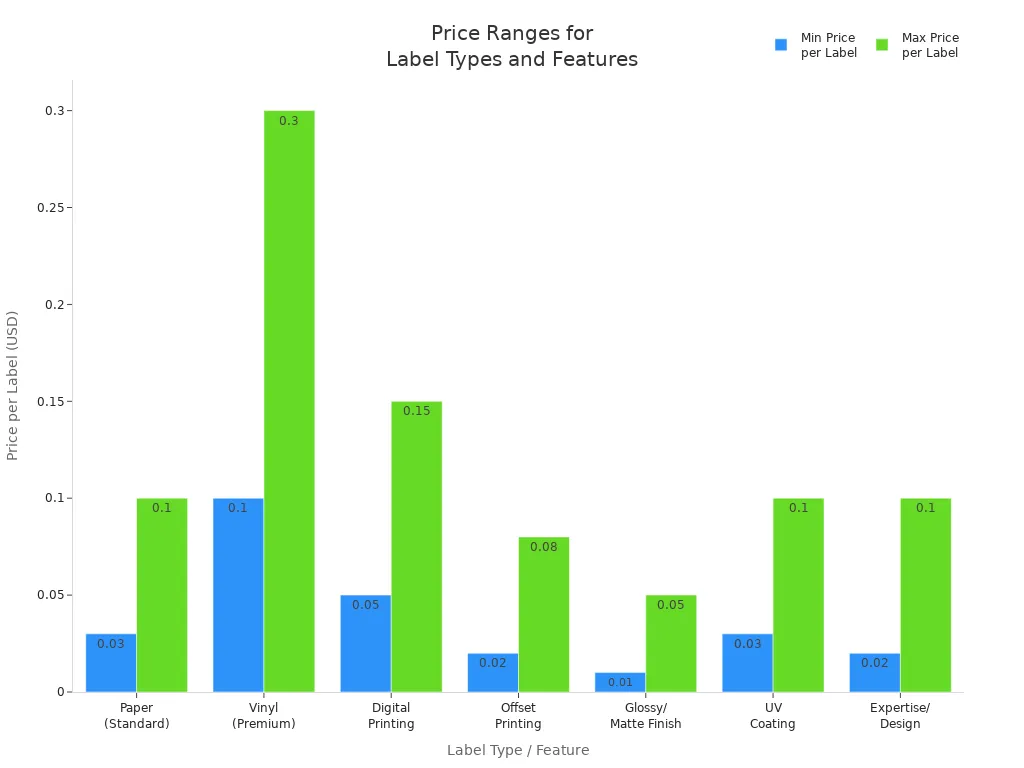
Premium labels cost more than regular ones. For example, if you buy 1,000 glossy vinyl labels with digital printing, each one might cost $0.18. Basic paper labels start at $0.03 each. The table below shows some common prices:
Label Type / Feature | Typical Price Range (per label) | Notes / Example |
|---|---|---|
Paper (Standard) | $0.03 – $0.10 | Basic standard labels |
Vinyl (Premium) | $0.10 – $0.30 | Durable, waterproof, higher-end look |
Digital Printing | $0.05 – $0.15 | Flexible for small runs |
Offset Printing (Bulk) | $0.02 – $0.08 | Lower cost for large quantities |
Glossy/Matte Finish | $0.01 – $0.05 | Adds shine or texture |
UV Coating | $0.03 – $0.10 | Extra protection and gloss |
Expertise / Design | $0.02 – $0.10 | Custom design or die cut label pricing |
If you plan ahead and think about supply chain problems, you can control the cost of custom labels for small business, even with premium materials.
Special Requirements
Some features make premium custom labels cost more. These special needs include:
Waterproofing: Labels with UV coatings or special films keep water out for up to 72 hours. This is much longer than regular labels. The price goes up because of these coatings.
Tamper-Evident Features: Security parts like holographic seals, strong glue, or breakable patterns stop tampering and make each label cost more.
Premium Materials: PET, recyclable foil, and other special materials make labels stronger and better looking, but they take longer to make and raise bulk label pricing.
Stronger Adhesives: Labels for glass jars or bumpy surfaces need better glue, which costs more than normal glue.
Certifications: Labels that follow EPR France/Germany or RoHS rules need extra work and papers, so the custom label printing price goes up.
Customization: Full-color UV printing, embossing, and die cut label pricing all add to the total cost.
These features help labels work well in tough places and meet strict rules. Businesses should think about the good and bad sides to pick what fits their needs and budget.
Many things change how much custom labels cost. These include the label’s shape, what it’s made of, how it’s printed, how many you buy, how hard the design is, the finish, and the glue used.
Key Considerations | Impact on Cost and Value |
|---|---|
Stronger and better-looking labels cost more | |
Quantity | Buying more makes each label cheaper |
Simple designs and shapes save money | |
Special Processes | Extra steps make labels cost more |
Businesses should think about both quality and price. They should ask for quotes that fit what they need. Planning ahead and picking good materials helps brands keep customers and get the most for their money.
FAQ
What affects the price per label?
Many things change the price for each label. The material, size, and how you print it matter. The design and how many you buy also change the price. If you order a lot, each label costs less.
How much does custom label printing cost for small businesses?
Small businesses pay between $0.10 and $1.00 for each label. The price depends on how many you buy, what it is made of, and the finish. Buying more at once makes each label cheaper.
What is die cut label pricing?
Die cut label pricing changes with shape and size. Normal shapes are cheaper. Special shapes need extra tools, so they cost more.
How much do waterproof labels cost?
Waterproof labels cost from $0.10 to $0.30 each. Using vinyl or polyester makes them cost more than paper labels.
Can I save money with bulk label pricing?
Bulk label pricing helps you spend less. If you buy thousands at one time, each label costs less and setup is cheaper.