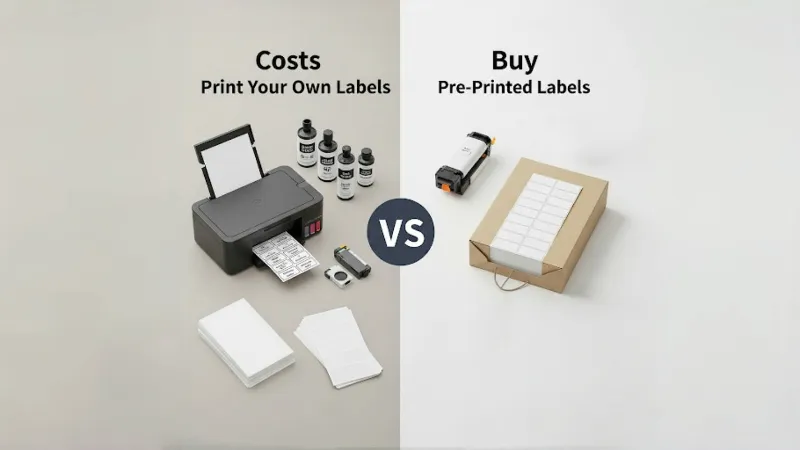
Is it really less expensive to print your own labels or buy them? Many businesses think about this question. The answer depends on how many labels you need. It also depends on what equipment you already have. How much you want to change your labels matters too. Some companies save money by printing small batches themselves. This is helpful when they need to be flexible.
Metric | In-House Printing | Professional Printing |
|---|---|---|
$0.28 | $0.36 | |
Average savings per package | $0.08 | N/A |
Percentage of businesses using | 62% | 34% |
Every business is different, so they should think about their own needs before choosing.
Key Takeaways
Printing your own labels can save money for small batches. You can also change designs fast when you print yourself. Buying labels costs less if you need a lot at once. Bought labels also have better quality and special materials. Printing labels when you need them makes less waste. It also helps your business stay quick and flexible. Think about all costs like equipment, supplies, labor, and quality before you choose. Use a checklist or flowchart to help pick the best choice for your business.
Cost Factors
Equipment Costs
If you want to print your own labels, you need equipment. A small business needs a good printer, software, and some tools. A desktop printer costs between $1,500 and $3,000. Industrial printers are even more expensive. Software for making labels costs $200 to $1,000. Accessories like label rewinders or applicators can cost up to $3,000. You also need a place to set everything up. Some businesses lease equipment to save money at first.
Cost Component | Price Range (USD) | Notes |
|---|---|---|
Desktop Printer | $1,500 – $3,000 | Good for small businesses |
Industrial Printer | $3,000 – $10,000 | Needed for high-volume jobs |
Software License | $200 – $1,000 | For professional design |
Accessories | $300 – $3,000 | Rewinders, applicators, etc. |
Workspace Setup | $500 – $1,500 | Computer, space, storage |
Supply Costs
Printing labels yourself means you must buy label stock, ink, or ribbons. Label stock is the biggest cost, making up most of the total. Paper labels are cheaper, but synthetic ones last longer and cost more. Ink or toner prices change based on the printer and how much color you use. You also need to pay for cleaning kits or new printheads. If you buy labels from a supplier, you can get a better price for big orders. Printing small batches yourself usually costs more per label.
Tip: Buying in bulk from suppliers can lower the price for each label, especially if you order a lot.
Time and Labor
Printing your own labels is fast. You do not have to wait for shipping. But someone has to run the printer, fix mistakes, and check supplies. This can take about an hour each day for a small business. Buying labels means less work, but you still need to keep track of inventory and shipping. Outsourcing can save time, especially for big or tricky jobs.
Quality Needs
Quality is important. Professional printing services use special materials and methods. Their labels look better, last longer, and can handle water or sunlight. DIY labels might fade or peel if you do not use good materials. New printers let businesses make nice labels themselves. This gives more control and lets you change designs fast. Printing your own labels works well for small batches or when you need to update often. For big or important jobs, buying from a professional might be best.
When to Print Your Own Labels
Printing labels at your business can be a good idea. Sometimes, it saves more money than buying from a supplier. Let’s see when printing your own labels is the best choice.
Small or Variable Runs
Most small businesses do not need thousands of labels. They might only need a few dozen or a few hundred. Printing your own labels can cost less in these cases. You do not have to buy a supplier’s minimum order. You can print only what you need, when you need it. This stops waste and saves money on extra labels.
No need to order a set amount
Less chance of having old or extra labels
Simple to try new designs or products
Note: Printing small batches at your business means you do not need to store lots of labels. This saves money on storage and makes inventory easier.
Customization and Variable Data
Some businesses need labels that change a lot. For example, they may want to add barcodes or expiration dates. Printing your own labels lets you update information fast. This is great for products with many types or for private labeling.
Easy to add things like QR codes or batch numbers
More control over how your labels look
Printing your own labels also helps your business stand out. You can change fonts, layouts, and colors anytime. You do not have to wait for a supplier. This helps you keep up with trends or customer ideas right away.
On-Demand Printing
On-demand printing means you make labels only when you need them. This has many good points:
You do not need to keep lots of pre-printed labels
You save money by not needing rush orders or extra stock
You can print labels right away for new or changed products. This helps you avoid waiting and keeps things running well. On-demand printing also fits just-in-time manufacturing. This means you only use what you need, when you need it.
Tip: On-demand label printing helps your business stay flexible. You can react fast to changes in what you sell. This is hard if you buy labels in big amounts.
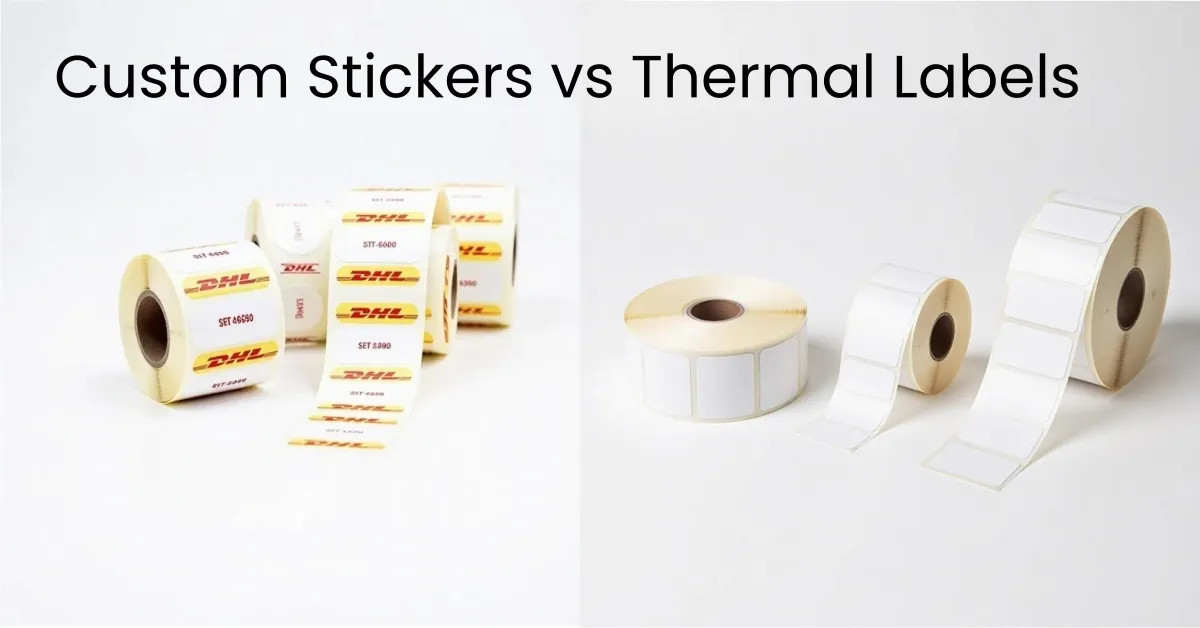
Printing your own labels is great for shipping. Fast and correct label printing makes shipping quicker and cuts mistakes. Many companies use thermal printers to save even more money. These printers do not need ink or toner. The labels also last and meet shipping rules.
When to Buy Labels
Sometimes, printing your own labels is not the best idea. Many businesses find buying labels from a supplier works better. This is true when they need many labels or want the best quality. It also helps if they need special materials. Let’s see when buying labels is the smarter choice.
Large Quantities
If a business needs thousands of labels, buying is cheaper. Suppliers use big machines and fast printing methods. These include flexographic and thermal transfer printing. These ways make each label cost less in big batches.
Suppliers give lower prices for large orders.
Businesses can get better deals with big contracts.
Buying in bulk stops last-minute restocking.
Companies can plan better and save more money.
Cost Aspect | Print Your Own Labels (In-House) | Buy Them (Bulk Order from Supplier) |
|---|---|---|
Initial Equipment | Label printer (~$200) | N/A |
Material Cost | Label sheets (~$10 per 100 sheets) | Included in per-label price |
Consumables | Ink cartridges ($40–60 each) | N/A |
Cost per Label (small runs, ~100 labels) | $0.30 to $0.50 | $0.30 to $0.60 |
Cost per Label (large runs) | N/A | $0.10 to $0.25 (bulk discount rates) |
Flexibility | High for small quantities | Less flexible, minimum order required |
Economies of Scale | Limited | Significant cost reduction for large volumes |
Additional Benefits | Immediate printing, no minimum order | Consistent quality, faster repeat orders |
Buying in bulk lowers the price for each label. It also helps with planning and cuts down on waste. Large orders can build good supplier relationships and save even more money.
Premium Quality
Some products need labels that look fancy and feel nice. Professional printing services can make labels with bright colors and sharp logos. This is hard to do with most in-house printers.
Suppliers use special machines for clear text and bright colors.
They keep branding the same on every product.
Professional labels can have foil, embossing, or shiny coatings.
Cost Component | Buy Them (Supplier Purchased) | Print Your Own Labels (In-House) |
|---|---|---|
Product Unit Cost | $3 per unit | $4 per unit |
Mold Development | N/A | $2,500 (custom mold) |
Packaging Design | $200 | $500 |
Total Initial Cost | $1,700 | $5,000 |
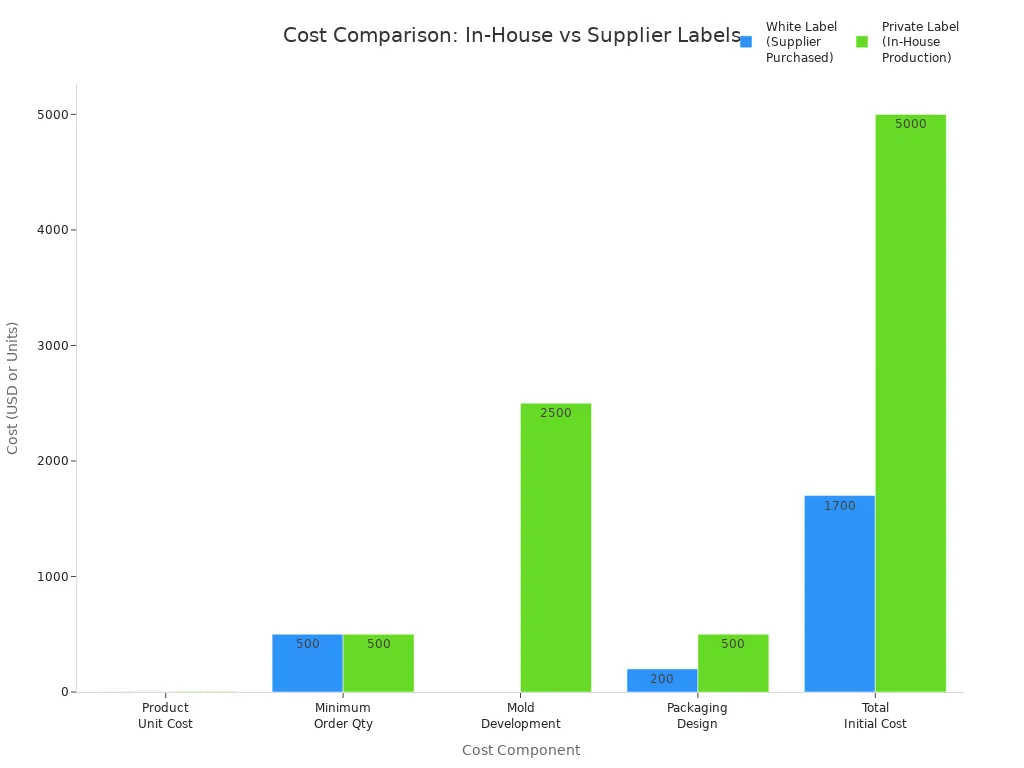
Note: Buying premium labels from a supplier costs less at first. It also makes sure your labels look professional. Printing at your business often costs more for custom molds and design.
Suppliers help brands stand out with unique designs. They make sure labels are easy to read. This helps customers know and trust the brand.
Specialized Materials
Some labels need to do more than just look nice. They might need to be waterproof or scratch-proof. Some need to be eco-friendly. Suppliers offer many special materials that most in-house printers cannot use.
Suppliers make labels with waterproofing or strong adhesives.
They can make special shapes and finishes like foil or embossing.
Certified suppliers make sure every label meets quality rules.
Printing your own labels works for simple shapes and papers. For anything harder, buying from a supplier is usually cheaper and better.
Suppliers make things easier for businesses. They handle big orders fast and keep quality the same. This means less work for your team. Your business can focus on what it does best.
Key Benefits of Buying Labels:
Same quality and branding on all products.
Access to special materials and finishes.
Lower cost per label for big orders.
Less time spent printing and checking labels.
Reliable supply and faster reordering.
If a business needs lots of labels or wants the best quality, buying from a supplier is often the best choice. This saves time, cuts down on work, and helps brands grow with confidence.
Cost Comparison
Itemized Breakdown
When people want to know if it is cheaper to print your own labels or buy them, they need to look at all the costs. Here is a side-by-side table that shows the main expenses for each option:
Cost Component | Print Your Own Labels (DIY) | Buy Them (Pre-Printed) |
|---|---|---|
Initial Equipment Cost | $100 – $300 for a label printer | $0 (no equipment needed) |
Ink or Ribbon Cost | $0.05 – $0.10 per label | $0 (included in label price) |
Label Material Cost | $0.01 – $0.03 per label | Included in purchase price |
Maintenance & Repairs | Ongoing (printer upkeep) | N/A |
Time & Labor | Needed for setup and printing | Minimal (labels arrive ready) |
Waste from Errors | Possible extra cost | Less waste, fewer mistakes |
Bulk Discounts | Limited savings | Big savings for large orders |
Thermal printers cost more at first, but they save money over time because they do not need ink. People who print their own labels can buy supplies as needed, which helps control spending. When businesses buy labels in bulk, they get a lower price per label, but they must order a lot at once.
Hidden and Long-Term Costs
Some costs do not show up right away. These hidden and long-term expenses can make a big difference:
Digital printing lets people print small batches, so they waste less if they need to change labels often.
On-demand printing means less money tied up in extra labels and less risk of having old labels go to waste.
Labor costs matter. Someone must design, print, and check the labels. If a business has staff shortages, this can slow things down.
Printer damage can happen if people use cheap supplies. Fixing a print head can cost hundreds of dollars.
Buying in bulk saves money, but it can lead to storage problems and wasted labels if products change.
Note: On-demand printing is cost-effective for small or changing orders. Bulk buying is cheaper for large, steady needs, but it can lead to waste if demand drops.
People should also think about the cost of mistakes, downtime, and keeping up with new label rules. Sometimes, the cheapest choice is not always the best in the long run. Each business should look at its own needs to find the most cost-effective way to handle label printing.
Print Your Own Labels: Pros and Cons
Advantages
Many businesses like printing their own labels. This gives them more control over how the labels look. It is important for products with strict rules. Companies can change label designs whenever they need to. This helps them follow new rules and stay current. Printing labels at work is often cheaper for small batches. You do not have to buy a lot at once. There is no worry about having too many extra labels.
Here are some main advantages:
You can check label quality yourself, which is good for products with rules.
You save money by not buying in bulk or wasting labels.
You can print labels with barcodes or dates when you need them.
You get products ready faster because you do not wait for shipping.
You can print labels anytime, even for last-minute orders.
You can make special labels for sales or events.
You can offer to print labels for others and make extra money.
You waste less paper by printing only what you need.
You help the planet by making fewer trips to ship stores.
Your labels always look the same because you do not use outside companies.
When you print labels at your business, you always have the right size and shape. This keeps your products looking the same every time.
Disadvantages
Printing your own labels has some problems. You must learn about new printers and software. This can be hard and cost a lot. Doing things by hand can slow you down and cause mistakes. Keeping customer data safe is also a worry. If you print labels with private info, you could lose it.
Here is a table that shows some common problems:
Challenge | Description | Impact |
|---|---|---|
Technical Challenges | You need to keep up with new printers and programs | Old tools make labels slower and worse |
Lack of Data Security | You might lose customer info when printing | This can hurt your business and trust |
Lack of Automation | Doing things by hand takes more time | More mistakes and less work done |
Startup Capital | You need a lot of money for printers and supplies | It is tough for new businesses to start |
Marketing Challenges | It is hard to get new customers | There is a lot of competition |
Hiring the Best Team | It is hard to find people who know how to print labels | This can stop your business from growing |
Printing your own labels does not work for every business. Some companies find it easier and cheaper to buy labels. This is true for big orders or when they need special kinds of labels.
Decision Guide
Checklist
Choosing between print your own labels or buy them can feel tricky. A simple checklist can help anyone decide which path fits best. Here are the main points to consider:
Business Size and Label Volume
Small businesses or those with low label needs often find it cheaper to print your own labels. Large companies needing thousands of labels usually save more when they buy them in bulk.Flexibility and Testing
DIY printing works well for testing new designs or making quick changes. On-demand printing lets you react fast to new products or rules.Quality and Material Needs
Professional printing services offer more choices for materials and finishes. If you need waterproof, metallic, or special labels, buying might be better.Customer Service and Support
Good suppliers answer questions quickly and help with design. Always check reviews before choosing a company.Pricing and Transparency
Compare all costs, including setup fees, ink, and shipping. Order samples to check quality before making a big purchase.Turnaround Time
Printing at your business means you get labels right away. Buying from a supplier can take days or weeks.Minimum Order Quantities
Some suppliers require large orders. Printing your own labels means you only make what you need.Brand Reputation
High-quality labels make a strong first impression. Think about how your labels reflect your brand.
Tip: Use a checklist to make sure you do not miss any hidden costs or important details. This helps you find the most cost-effective option.
Flowchart
A flowchart makes the decision even easier. Follow these steps to see which choice fits your needs:
Question | If Yes | If No |
|---|---|---|
Do you need fewer than 1,000 labels per month? | Print your own labels | Go to next question |
Do you need special materials or finishes? | Buy them | Go to next question |
Do you need to change designs often? | Print your own labels | Go to next question |
Is top-quality print a must for your brand? | Buy them | Print your own labels |
This flowchart helps anyone quickly see which option is more cost-effective for their situation. Every business is different, so review your needs before making a final choice.
Deciding to print your own labels or buy them depends on your business size. It also depends on how many labels you need and what quality you want. If you only need a few labels or change them often, printing yourself can save money. If you need lots of labels or special materials, buying is usually cheaper. You should look at the cost tables, the good and bad points, and the checklist. Try out different label materials, look into machines that help with labeling, and talk to printing experts to see what works best.
FAQ
Is it always cheaper to print your own labels?
No, it is not always cheaper. Printing your own labels can save money for small batches. It also helps if you change labels often. But for big orders, buying from a supplier is usually cheaper per label. Every business should add up all the costs before choosing.
What costs should people consider when comparing printing and buying labels?
People need to think about the printer cost, ink or toner, label material, labor, and fixing the printer for DIY labels. If you buy labels, look at the price for each label, setup fees, and shipping. Both ways have hidden costs, so checking every cost is important.
When does it make sense to buy them instead of printing at home or work?
Buying labels is best for big orders, fancy quality, or special materials. Professional printing services give lower prices for lots of labels and more choices for finishes. This saves time and makes sure every label looks the same.
Can home businesses save money by printing their own labels?
Yes, home businesses can save money with DIY labels for small or special orders. They do not have to buy a lot at once and can print when needed. For simple designs and small amounts, printing at home usually costs less.
Do professional printing services offer better quality than DIY labels?
Professional printing services use better machines and materials. Their labels look clearer and last longer. DIY labels can look nice, but may not be as strong or bright as pre-printed labels, especially for hard or colorful designs.